Dating someone with depression: how to support them and stay yourself
You've met someone good, and they've told you they live with depression, or you're starting to suspect it. What health experts suggest, what research says about depression and relationships, and where your role ends.
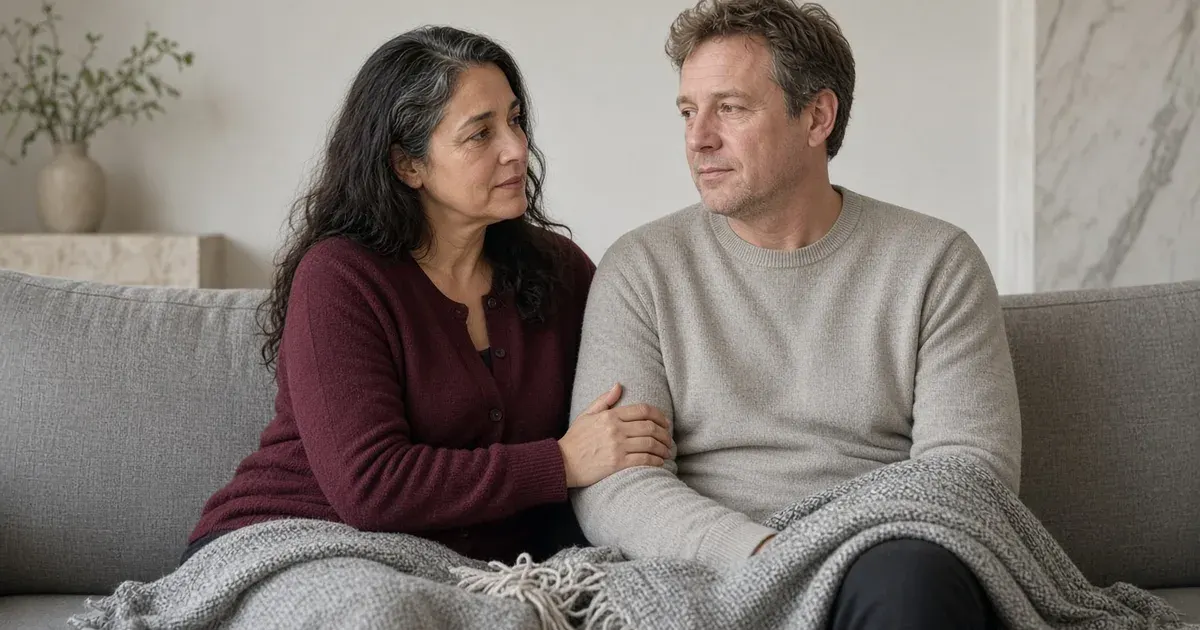
Dating someone with depression can work well. What usually helps is learning how depression shows up for them, encouraging treatment rather than trying to be their treatment, and keeping your own life going. And one more thing: you’re their partner, not their therapist.
What depression is, and isn’t
The National Institute of Mental Health describes depression as different from ordinary sadness that passes.4 It can affect how a person feels, thinks, sleeps, eats and works.4 It’s also one of the most common mental disorders in the U.S.4
That’s useful when you’re new to someone. The flat weekend or cancelled plan may have nothing to do with how they feel about you. Mayo Clinic lists irritability, low energy, sleep changes and losing interest in things they used to enjoy, including sex, among common symptoms.1
How depression and relationships affect each other
It goes both ways. In a study of nearly 1,900 middle-aged and older married couples, marital discord predicted more depressive symptoms two years later.3 Depressive symptoms also predicted more discord later, both for the person with the symptoms and for their spouse.3
That study was about married couples, not new relationships, and it shows a pattern rather than cause. Still, it’s a reminder that the relationship isn’t just something depression happens to. How you two handle the hard weeks matters.
What actually helps
The Anxiety and Depression Association of America suggests learning about your partner’s condition, encouraging professional treatment, noticing small steps forward instead of criticizing symptoms, and asking what they need rather than assuming.2 Mayo Clinic adds practical help, like offering to help set up appointments or go along.1
Take Nadia, 47, four months into dating Ben. When Ben went quiet for most of a week, her first instinct was to fix it with plans and pep talks. It didn’t help. What did was asking him what a good day looked like right now, then keeping things small: a walk, takeout, an early night. Nadia and Ben are invented, but asking before acting is the part that tends to carry over.
Looking after yourself
ADAA notes that partners often feel sad, scared, angry or resentful, and then guilty about it.2 Those feelings are normal. They’re also a signal to protect your own friendships, sleep and time.
It’s fair to notice whether the relationship works for you. Support is one thing. Being the one person holding someone up is another. If you’re seeing distance and can’t tell if it’s depression or interest fading, why is my partner distant? can help you think it through. If the worry is taking over your evenings, see how to stop overthinking your relationship.
If your partner talks about not wanting to live, take it seriously. In the U.S., you can call or text 988, the Suicide & Crisis Lifeline, any time.1
What this doesn’t cover
The guidance here comes from health organizations, not from studies of new couples dealing with depression, which are scarce. The marriage study tracked couples over two years and can’t say which came first for any one person. Nothing here replaces advice from your partner’s own doctor or therapist.
Try it
Which of these sounds most like where you are?
Steal this text
Say it in your own words, or start from these
Offering help without taking over
I'd like to help, but I don't want to guess. What would actually make this week easier for you?
Naming your own needs
I care about you and I'm in this. I also need some time with my friends this weekend so I don't run on empty. Is that okay?
People who talk about this
- Credentialed source
Eli J. Finkel
Research on how modern marriage and long term relationships work, and what partners expect from each other.
- Credentialed source
- Trending voice
Julie Menanno
How couples get stuck in conflict cycles and how to feel secure with a partner.
- Credentialed source
Justin J. Lehmiller
Research on sex, desire, casual relationships and friends with benefits.
- Credentialed source
Lori Gottlieb
What happens in the therapy room, including breakups, dating choices and the stories people tell about love.
Further reading
Pew Research Center, 2020
Dating and relationships: Key findings on views and experiences in the US (opens pewresearch.org)National survey data on how American adults feel about dating today, including why many say it has gotten harder.
The Gottman Institute
How to Stop Detached Dating and Create Real Connection (opens gottman.com)Explains why dating can feel guarded and transactional, and how to show up with more openness.